
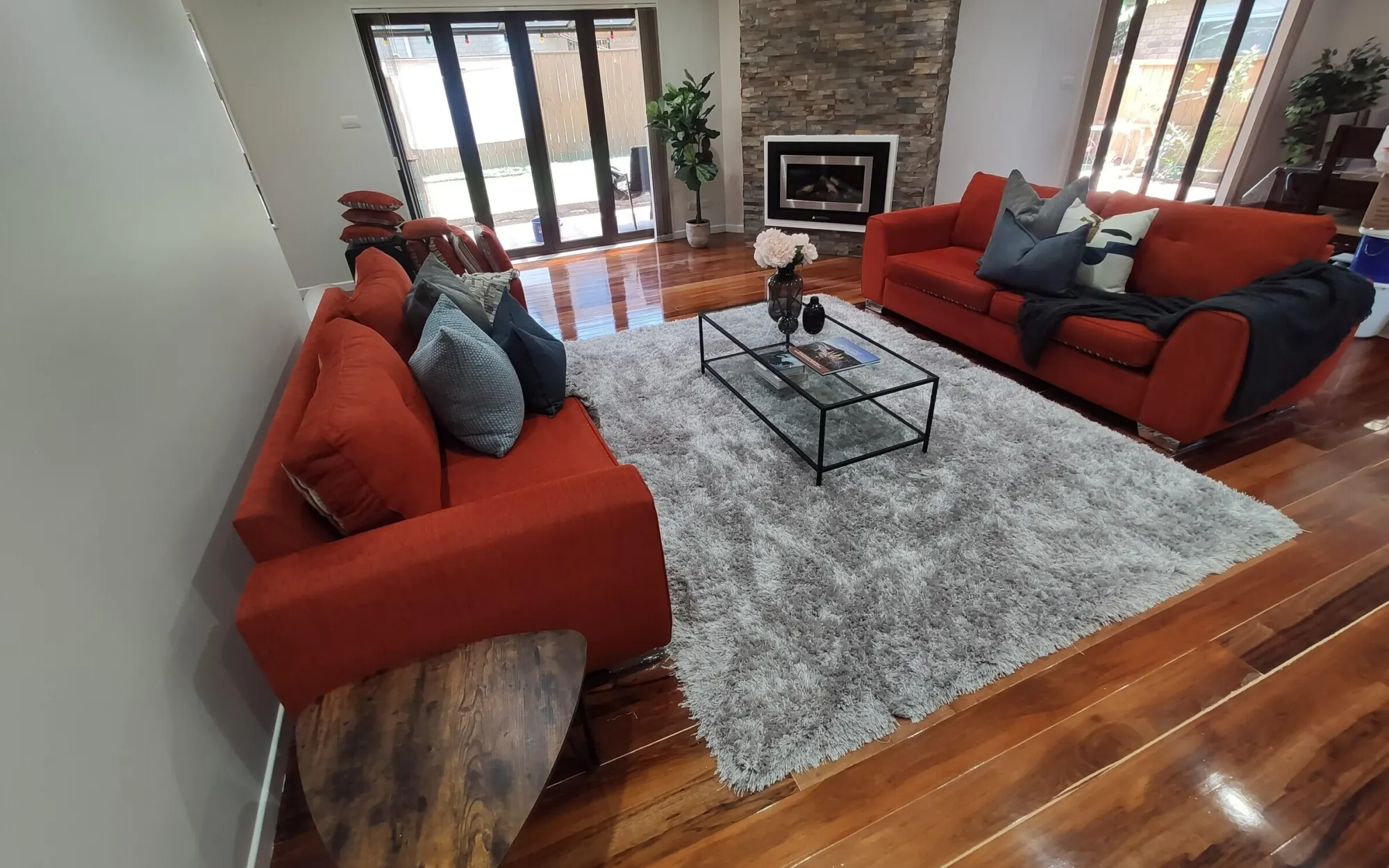
You can prepare to live in a partially staged home by agreeing what stays, what is added and how each room needs to look for photography and viewings. The most useful step is to ask practical questions before installation, then keep the answers with your campaign plan.
Start with the agreed room plan
Partial home staging works with selected furniture already in an occupied property, then fills specific gaps with hired pieces, art, rugs, lighting or accessories. That makes the boundary between your belongings and the staging scope important. Before installation, review the proposal room by room rather than relying on a general label.
Ask which existing pieces are staying, which need to be removed or stored, and what the staging team plans to add. If a room is not included, confirm whether it still needs preparation for photography or open homes. A written list is easier to follow than trying to remember which cushion, lamp or occasional table came from where.
Questions for the room plan
- Which rooms and existing pieces are included in the agreed scope?
- Which hired items will be added to each room?
- What must be removed before installation, and what may remain stored onsite?
- Are there items that should not be moved or used during the campaign?
- Who should receive a question if an item cannot stay in its planned position?
Ask how the rooms should work day to day
A staged room still has to fit around ordinary life, but the practical answer will depend on the property and the agreed pieces. Ask what can be used normally and what is intended only for presentation. That question is especially useful for beds, dining settings, occasional chairs, rugs and decorative objects.
Then ask how each space should be reset. A simple reference photo after installation can show the intended placement of furniture and accessories without creating a complicated daily routine. If something needs to move temporarily, confirm whether you can reposition it yourself and where it should go. This protects clear walkways and the sightlines established for listing photography.
Household circumstances belong in this conversation too. If children, pets, flatmates or frequent visitors will use a staged area, explain that before the scope is finalised. The aim is not to guess at a restriction. It is to identify the rooms that need a clear, property-specific answer before hired items arrive.
Build a quick reset for photography and viewings
The Auckland seller staging checklist recommends clearing loose items, protecting walkways and keeping the campaign dates visible. In an occupied home, turn those principles into a short reset you can repeat before the photographer, agent or prospective buyers arrive.
Walk from the entrance through the key living spaces and note where daily belongings will be put away. Check that benches and open shelves are clear, furniture is back in its agreed position, cushions and throws match the installation reference, and doors and paths remain easy to use. Decide where chargers, pet equipment, laundry, work gear and children’s items can go without being shifted from one photographed room to another.
Ask your agent which spaces are likely to be photographed and included in viewings, then make sure the staging brief covers the same route. This avoids preparing the living room carefully while overlooking an entrance, utility area or connecting space that will also appear in the campaign.
Confirm cleaning and care before you need the answer
Different surfaces and materials may need different care, so ask the staging team what cleaning approach applies to the hired pieces in your home. Find out who to contact about a spill, mark or damaged item and what information they need. Keep that contact with the proposal rather than waiting until the next open home is close.
It is also worth separating ordinary cleaning from moving or restyling. Ask whether rugs, artwork, lamps and larger furniture should stay in place while you clean around them. If a room needs trade work or a repair after installation, contact the team before shifting the staging scheme or exposing hired pieces to dust and equipment.
Plan for a campaign date that changes
The initial proposal should state the agreed hire period and collection expectations. If photography, an auction, settlement planning or another campaign milestone changes, do not infer what happens next. Ask how the revised date affects the current scope, whether availability needs to be confirmed and when collection would be arranged.
Spaces’ published process says collection is coordinated around the agreed period and that campaign changes should be raised early. The useful household question is therefore straightforward: who needs the new date, and which parts of the proposal need to be reconfirmed? This keeps the property plan, agent timetable and staging arrangements aligned without inventing a general extension policy.
Send one concise list before installation
You do not need an elaborate document. Send the property location, the rooms being considered, current photographs, the furniture that must remain, the people or pets using the home, access details and the working photography date. Add your questions about daily use, cleaning, moving items, campaign changes and collection.
If the scope is still unclear, compare full and partial staging before the proposal is finalised. You can also review the Spaces portfolio for examples of different room types. When you are ready for a property-specific plan, request a partial-staging quote and include the living arrangements that the team should consider.